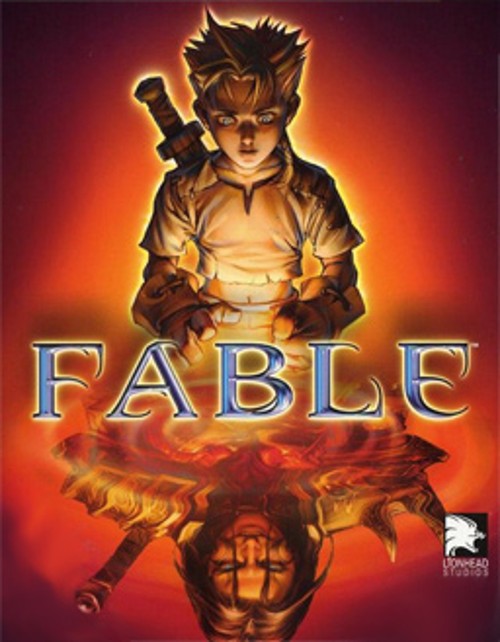


Fable was released for Xbox in September 2004, then ported to Windows and Mac OS X in expanded form as Fable: The Lost Chapters. It was developed by Lionhead Studios and published by Microsoft Game Studios. The adventure takes place in Albion, a fantasy world whose towns, forests, bandit-held roads, and ancient ruins are linked by the life of one customizable Hero. The player begins as a child in the village of Oakvale, witnesses its destruction by bandits, and eventually trains at the Heroes’ Guild under the Guildmaster. From there, the Hero can accept quests, develop abilities, and shape Albion.
Fable’s central design is the visible consequence of player behavior. The Hero may be generous or cruel, with choices affecting alignment, appearance, and how villagers respond. Eating food changes physique, while investing experience points in Strength, Skill, and Will creates different combat builds. Strength covers physical power and health; Skill governs speed, ranged attacks, and accuracy; Will enables spells such as Force Push and Lightning. The game also tracks age: using experience to improve the Hero makes him older, and excessive bodily development can produce an exaggerated physique. Marriage, property ownership, and tattoos add unusually personal consequences.
Many quests are optional, but several define the plot. The Hero investigates the lost history of his family, discovering that his mother and sister were both directly tied to the same bandit attack that opened the story. The principal antagonist is Jack of Blades, an ancient masked entity seeking power through the Sword of Aeons. The Hero confronts Jack at the northern Hook Coast, and the finale offers a decisive choice about whether to use the Sword of Aeons or destroy it. The original release concludes with a battle at the Guild, while The Lost Chapters adds the snowy Northern Wastes.
Beyond its branching morality, Fable became notable for its attempt to make a role-playing game feel reactive without abandoning a directed narrative. Lionhead promoted systems including scars from combat, hair and beard growth, social gestures, and the ability to purchase homes. Some famously advertised features, such as having children with every villager or following the Hero throughout life, were more limited than early publicity suggested. Nevertheless, Fable established a distinct identity through Albion’s humor, moral reversals, and stories. Its success led to Fable II in 2008, Fable III in 2010, and later spin-offs, while Lionhead closed in 2016.
반응
0
0 코멘트
첫 댓글을 남겨보세요
아직 아무것도 없습니다.
관련된 게임
게임
Mixtape
게임
Airport CEO
게임
Battlefield 6
게임
Xbox Series X
게임
Xbox Series S
게임
TankRat
새 기사와 스포일러 알림을 받으시겠어요?